Legal Guides · Updated October 2026
How do you prove a slip and fall case in California? You must show the property owner knew or should have known about a dangerous condition and failed to fix it or warn you. Evidence disappears fast, so what you do in the first days matters.
On this page: What to prove · Notice · Evidence · Defenses · Special situations · FAQ
What You Have to Prove
Slip and fall cases are premises liability claims. Unlike dog bites, there is no strict liability: the injured person must show the property owner or occupier was negligent. In general, that means proving:
- The defendant owned, leased, occupied or controlled the property
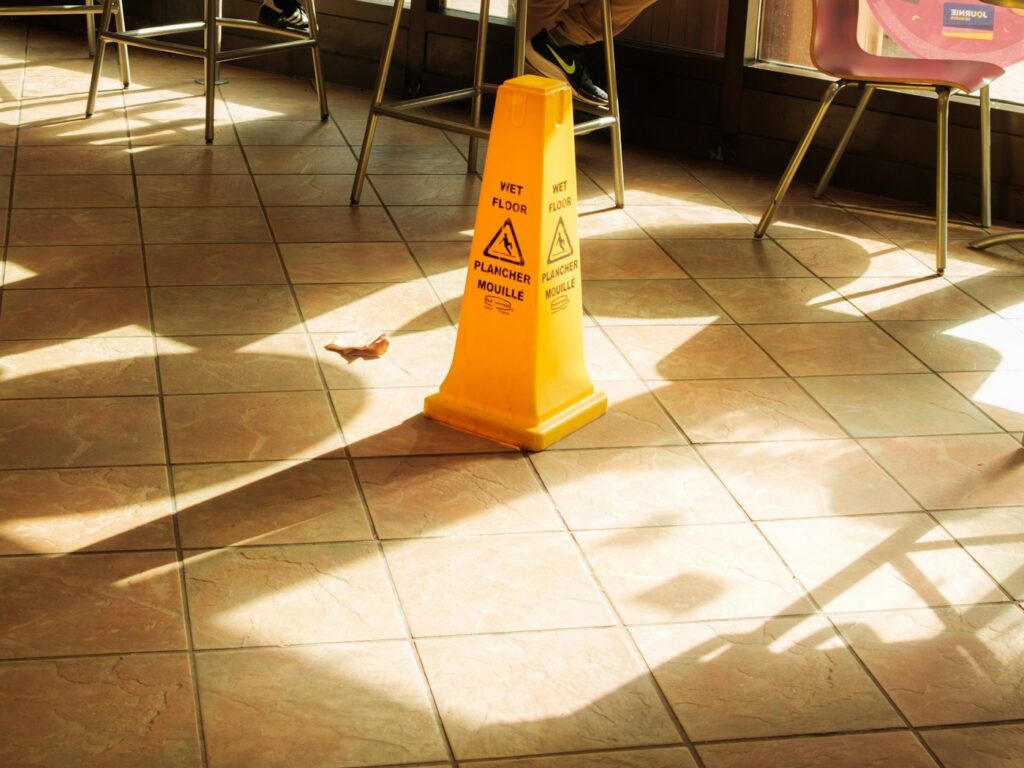
- A dangerous condition existed, such as a spill, broken step, loose mat or poor lighting
- The defendant knew or should have known about the condition
- The defendant failed to fix it or warn about it within a reasonable time
- The condition caused your fall and your injuries
The Key Issue: Notice
Most slip and fall cases turn on notice. Property owners are not automatically responsible for every hazard; they are responsible for hazards they created, knew about, or would have discovered through reasonable inspections.
- Actual notice: the owner or employees knew about the hazard, for example because a customer reported the spill.
- Constructive notice: the hazard existed long enough that a reasonable inspection would have found it. California courts allow this to be shown with circumstantial evidence, such as the condition of a spill or the absence of recent inspections.
Stores and businesses usually have inspection or “sweep” policies. Their records, or the lack of them, are often central evidence.
Evidence to Gather
- Photos of the hazard before it is cleaned up or repaired, from several angles, plus the surrounding area and lighting
- Your shoes and clothing, kept as they were
- An incident report. Ask the business to prepare one and request a copy
- Surveillance video. Many systems overwrite footage within days or weeks, so a lawyer should send a preservation demand quickly
- Witness names and phone numbers
- Inspection logs, maintenance records and prior complaints
- Medical records connecting your injuries to the fall
Common Defenses
- “It was open and obvious.” An obvious hazard can reduce or sometimes defeat a claim, but businesses may still be responsible if people predictably had to encounter it.
- “You weren’t paying attention.” Under California’s comparative fault rule, your share of fault reduces your recovery but does not bar it.
- “We didn’t know.” This is why inspection records and video matter.
- “Your injury was pre-existing.” Consistent medical records help answer this.
Special Situations
- Public property: falls on government property, such as sidewalks or public buildings, require a government claim within six months. See dangerous road conditions.
- Falls at work: injuries on the job usually go through workers’ compensation, but a separate claim may exist against a third party, such as a property owner who is not your employer.
- Apartment and rental property: landlords can be responsible for hazards in common areas and for repairs they failed to make.
Deadline and Results
Most slip and fall claims must be filed within two years. Smith Trial Group’s results include a $200,000 settlement for a slip and fall in a retail store. Every case is different, and results depend on the facts. Learn more on our slip and fall page.
Frequently Asked Questions
Is a store automatically liable if I slip and fall?
No. You must show the store knew or should have known about the hazard and failed to fix it or warn customers within a reasonable time.
What if I was not watching where I was going?
California’s comparative fault rule may reduce your recovery by your share of fault, but it does not automatically bar your claim.
How do I get the store’s surveillance video?
Ask the store to preserve it immediately, and have a lawyer send a written preservation demand. Footage is often overwritten within days or weeks.
How long do I have to file a slip and fall claim?
Generally two years. If the fall happened on government property, a claim must usually be filed within six months.
About the Attorneys
Smith Trial Group represents injured people and employees throughout Southern California from its Newport Beach office. Founding attorney Cardon Smith clerked for a United States District Judge and litigated for Fortune 500 companies before founding the firm in 2015. Meet our attorneys or see our case results.
Injured in a Fall? Talk to a Lawyer
Free, confidential consultation. Tell us what happened and we will give you a straightforward assessment of your options.
This guide provides general information about California law as of October 2026. It is not legal advice, and reading it does not create an attorney-client relationship. Every situation depends on its facts, so speak with a lawyer about yours.


Free Case Evaluation
Call us anytime at 855-202-2232 or fill out the form below to receive a free and confidential initial consultation.